Showing posts with label Short Story Wednesday. Show all posts

Wednesday, August 22, 2012

Short Stories on Wednesday: Sci-fi and Fantasy Stories by Ray Bradbury


        It’s been so long since I did a short story post. Time has really been in short supply these past couple of months. But, here we are again. I’ve got two fantasy stories for you this time. Sci-fi or fantasy is not usually my genre of choice but I saw Francois Truffaut’s movie version of Fahrenheit 451 and loved it. It made me curious about Ray Bradbury’s work and when I found a copy of his Zen in the Art of Writing, I picked it up. It was a good book, but as far as writing guides go, I didn’t like it nearly as much as On Writing by Stephen King. Fiction is obviously what Bradbury does best. This week I read two of his best known short stories. Both of them have been adapted several times in writing, on TV and on film so some elements may seem familiar to you while you read them.

The Veldt: George and Lydia live in a fully automated house with their two children. Society has reached staggering levels of mechanization with machines to do absolutely everything for you. There are machines that will tie your shoes, cook your food and even rock you to sleep. The highlight of this home is the nursery which can convert the children’s imaginings into a virtual reality on its walls. Things start getting scarily real when the kids’ obsession with the African Veldt comes alive on the walls of the nursery.

A Sound of Thunder: This story takes the concept of “the butterfly effect” and gives it a literal spin. Set in a future where time travel is not just a reality but a form of recreation. Time Safari is a company that promises to take its customers back to prehistoric times for a thrilling dinosaur hunt. But the slightest move you make in the past can have a powerful ripple effect that can change the future in unimaginable ways.

       Both stories are set in the future. However, I hesitate to call it dystopian because, at least on the surface, it seems like mankind has reached amazing heights. But beneath the clever inventions and smart machines, people seem more dissatisfied than ever. The Veldt, especially, makes a very pertinent comment on our increasing reliance on machines and disconnect from each other. If, like me, you don’t usually dabble in these genres, read these stories anyway. They are very entertaining and there is a lot more to them than time machines and smart homes. You can read them online here and here.


Wednesday, January 25, 2012

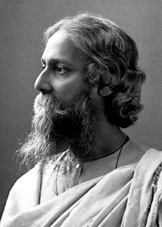
Short Stories on Wednesday: A Wife’s Letter by Rabindranath Tagore


   Risa, who hosts Short Stories on Wednesday, has switched things up a bit this year to add a little excitement to the event. One of the new elements is that the last Wednesday of every month will be theme-based. Risa comes up with a word or idea and we read a story (or several stories) to match. This time around, the theme is ‘letter’. We are to interpret that anyway we please. I love the idea, mostly because, when deciding on a story to read, this gives you a definite direction to look in but it’s still broad enough so you don’t feel limited.

    A couple of weeks ago Mel U had done an excellent guest post on Breadcrumb reads about Indian short stories and one of the author’s he mentioned was Rabindranath Tagore. I’ve read a couple of Tagore’s translated poems and maybe a short story or two very long ago but nothing since then. Happily, this week’s theme gives me a chance to revisit Tagore.

A Wife’s Letter

    This is an epistolary story i.e. the story unfolds within a letter. Mrinal writes the letter to her husband of 15 years. As she reminisces on her past and their life together we learn of their arranged marriage when Mrinal was a mere child of 12. Her husband’s family, though not outright cruel, are mostly indifferent to her, as is her husband. Her beauty is considered her only asset and her intelligence is treated as an affliction. Then one day, Bindu walks into their home and family. Bindu is the orphaned, unwanted younger sister of the family’s eldest daughter-in-law. Mrinal takes the scared and abused girl under her wing and starts to care for her. Bindu in turn, adores Mrinal and the two create a sort of parallel world of their own. But then Bindu’s marriage is arranged to a mentally unstable man and she is to have no say in the matter. Mrinal tries to fight for her but is powerless in the face of her family’s adamant insistence. What follows is heart-wrenching to say the least.

“In Bengal no one has to search for jaundice, dysentery, or a bride; they come and cleave to you on their own, and never want to leave.

    The first thing that strikes me about this story is that it is one of those rare ones where a male writer writes in a female voice and gets it so absolutely right. I’m not being sexist here; it’s equally rare for women writers to write in a male voice without sounding contrived. Even though the culture and era that the story is set it in may be alien to most, Mrinal is recognizable and she wins your sympathy and respect right off the bat.
If you would like to read this story, you can find it here.


Wednesday, January 18, 2012

Short Stories on Wednesday: The Thing around your Neck by Chimamanda Ngozi Adichie


Chimamanda Ngozi Adichi made an impactful debut with her maiden novel Purple Hibiscus. She won the 2005 Commonwealth Writer’s Prize for best first book. Then came the epic, Half of a Yellow Sun, set during the Biafran War. It won all sorts of accolades, including the Orange Prize for Fiction. Half of a Yellow Sun is one of my favourite works of contemporary literature and I was very impressed with Adichie’s narrative style (my review). So, when I spotted her latest book of short stories, The Thing Around Your Neck, at my local library, I snapped it up. I had hoped to finish the book by now and pick my favourite stories to write about, but life intervened and I’ve only managed to read the first two stories so far. But if these are anything to go by, I’m looking forward to reading the rest of the book.

Cell One.
Nnamabia is the wayward son of fairly wealthy family. Things have been getting progressively worse, with him even robbing his own mother’s jewellery for a couple of night’s worth of fun. It’s a dangerous time for the once-serene, university town of Nsukka. Cults and brutal daylight murders have become commonplace. One day, Nnamabia is arrested on suspicion of belonging to a cult. He protests his innocence, but is otherwise not unduly concerned about his predicament. His father’s position and money ensures that he doesn’t have to eat the terrible prison food, his cell mates seem to like him and the whole situation seems to have a certain glamour and drama to it which appeals to the cocky young boy. The only thing he’s really scared of is the dreaded cell one. Terrible things happen to an inmate unlucky enough to be dumped there and the prison authorities constantly use cell one as a threat to keep the inmates in check.

I liked this story. Mostly because the character of Nnamabia is pretty well drawn. You find yourself exasperated with him and concerned for him in equal bits. It’s a fairly straightforward tale and Adichie resists the temptation to push it over the edge and make a proper blood-curdler of it. This story was first published in the New Yorker so luckily it is available online here.

Imitation.
Nkem is the wife of a wealthy businessman and art collector. For the past several years her husband has been spending most of his time in Nigeria, visiting Nkem and the children in America for just a couple of months in the year. Nkem has gotten used to life in America and to the loneliness that is her constant companion. When the story begins, she has just heard that her husband has a girlfriend in Nigeria and they have moved in together. Memories, insecurities and desires come flooding back to her. In an attempt to imitate her husband’s mistress, Nkem hacks off all her hair. This imitation is echoed in all the ‘imitation’ artefacts that her husband collects. Nnkem loves those artefacts and their histories, even though she knows they are not the real deal. Finally, it is time for her husband to visit them again but Nkem cannot decide what to do or how to react to him.

Unlike Nnamabia from Cell One, Nkem feels like a more standard-issue character. It is difficult to sympathise with her or even like her very much though you are very obviously supposed to. This is largely because she doesn’t really let you into her head at any point and although you are told what she is thinking, you never really get a sense of what she is feeling. There are other things to like about the story though. It is well written and insightful, especially when it talks of the immigrant experience. Though Imitation is a good story, it stops just short of being great.

Wednesday, January 11, 2012

Short Stories on Wednesday: George Bernard Shaw


The only Shaw I've read so far is the iconic play Pygmalion which, as you probably know, was later adapted as My Fair Lady. I have a vague memory of seeing an amateur performance of Androcles and the Lion ages ago (Mel U has a nice review of it here). I also own a non-fiction book by Shaw titled The Intelligent Woman’s Guide to Socialism and Capitalism (how’s that for appealing to a reader’s vanity?), but I haven’t read it yet. This week I stumbled upon a short story by Shaw and now I really want to read more of him.

The Miraculous Revenge

Our narrator is Zeno Legge, a pompous, slightly mad youth. Think Bertie Wooster with a mean streak.  Zeno means to visit his uncle, who is a Cardinal. The Cardinal decides that the only way to keep Zeno away from trouble and from his uncle’s house is to send him to a village called Four Mile Water to investigate a miracle. A ‘dirty, drunken, blasphemous blackguard’ named Fitzgerald had been buried in the sacred burial ground by the river. But the nun’s and saints buried in the same cemetery are unwilling to share their afterlife with such a disreputable character. So the amazed village wakes up to find that Fitzgerald’s grave has been moved to the opposite bank of the river, overnight. Zeno sets out to debunk the miracle but once in Four Mile Water, he is convinced. What’s more is that he has fallen in love (“I had been in love frequently; but not oftener than once a year had I encountered a woman who affected me so seriously as Kate Hickey.”). But Four Mile Water has more miracles up its sleeve.

I quite liked this story. It was witty and engaging from the very beginning. The bumbling idiot/annoying pest character was funny, if not very likable. I believe Shaw wrote quite a few short stories but sadly, this was the only one I could find online. Anyone else read a short story by Shaw?


Wednesday, December 14, 2011

Short Stories on Wednesday: Jazz Age Stories by F. Scott Fitzgerald


F. Scott Fitzgerald’s short stories have been on my must-read list for a long time now but I never got around to it. Last month I read Hemmingway’s A Movable Feast which shows Fitzgerald in a rather comedic and mostly unflattering light. But even Hemmingway has nothing but praise for Fitzgerald’s body of work. So I was wondering where to start when I stumbled on to Laurie’s blog Fitzgerald Musings and saw that she had mentioned stories that she thought were Fitzgerald’s finest.  Since Laurie’s blog is named after, and dedicated to F. Scott Fitzgerald, I figured I could do no better than to start with her recommendations. I’m glad I did. Onto the stories.

Winter Dreams
Dexter is an enterprising and sensible young man. Except when it comes to Judy Jones the beautiful heartbreaker. The story itself is a familiar one; we’ve all heard, read or seen it before. The beauty lies in the telling. I’ve heard it said that this story was sort of a test drive of the Great Gatsby idea. In any case it was a very well told and memorable story. Here it is if you'd like to read it online.

Bernice Bob’s Her Hair
Bernice is a well bred but socially inept young girl who’s visiting her cousin Marjorie who is hugely popular. Marjorie reluctantly gives Bernice a mini-makeover and suddenly Bernice starts to get a lot more attention from the guys. It’s all going great until a miffed Marjorie calls her bluff. I really liked the way Fitzgerald constructed Bernice’s character. I find it rare that a male author can describe a female mind without it sounding fake or stilted. Fitzgerald really nails it here. Check it out online.

The Diamond as Big as the Ritz
This is such fantastical tale, sort of Arabian nights meets a Rider Haggard adventure. John T Unger is visiting his friend Percy Washington. But Percy is not from a run-of-the-mill wealthy family. For one, they live on a giant, hidden diamond and do bizarre things to keep it hidden. As much as this is thrilling and hilarious it is also a satire on the isolation and the ethical void that the very wealthy seem to live in. You can read it here.

The Offshore Pirate
How often have you read/seen/heard a romantic comedy which was equal parts romantic and funny without the extreme cheesiness that so often plagues the genre? Fitzgerald shows us how it’s done in The Offshore Pirate.  It about an obstinate and free spirited young girl who falls for a mysterious pirate. I don’t want to tell you anymore about the story because it would ruin it for you. Read it here and enjoy.

The Rich Boy
Begin with an individual, and before you know it you find that you have created a type; begin with a type, and you find that you have created — nothing.” When a story begins with a line like this, you know it’s going to be good. For some reason that I cannot adequately explain in a few sentences, this struck me as a really sad story. Not because anything bad happens but because the gradual decline of Anson Hunter, the protagonist, is almost like watching the slow decay of a magnificent edifice. Funny when you think about it because Anson is a privileged man, adored by women, genuinely loved by at least two of them; hardly an underdog. He is in fact the sort of arrogant, spoilt, rich kid you should hate instantly. But you don’t. It’s amazing. Read it here.

I’m not for a minute suggesting that these are Fitzgerald’s best stories. For one, I haven’t read enough of his stories to judge and for another, I don’t believe you can rank and grade stories. What this list does, however, is to give you an idea of the amazing range and variety of Fitzgerald’s work. No two stories are alike but they’re all really satisfying.


Wednesday, November 23, 2011

Short Stories on Wednesday: Top Ten Stories of All Time


A couple of days ago, I came across this post on Flavorwire  listing, what they call, the top 10 short stories of all time. Now that is just the kind of over ambitious claim that is designed to raise hackles all over the place. Obviously, no one can condense centuries’ worth of short stories into one handy little countdown and no two people can possibly agree over the stories that ought to make it to such a list. Of the top of my head, I could think of at least fifty stories that deserve to be on a top ten list. But here’s the thing; I love lists. So I had to check this out and having done that, I had to read all of the stories on the list that I hadn’t read yet. That made for a busy two days but it was largely worth it. Unfortunately, there was one story on the list that I could not find online or in my library so I offer my opinion on the (allegedly) top nine stories of all time. The stories are listed in random order on Flavorwire, there is no best or worst. I’m listing them here in the order in which I read them which is pretty close to the original list.

1. “For Esmé – with Love and Squalor” by JD Salinger
I’ve read this story as part of Nine Stories by JD Salinger and blogged about it here. It is one of Salinger’s better known stories. It’s about an unnamed sergeant who meets a gentle young girl called Esme just before he goes off to war. The myth of Esme sustains him through the squalor of war and its aftermath.
I didn’t find this story online, although admittedly, I didn’t look very hard since I had already read it. Do read it though, it’s a classic.

2. "Silver Water" by Amy Bloom
A woman talks about Rose, her beautiful and talented sister and Rose’s slow and painful descent into madness. The story also looks at Rose’s family, who are grappling to deal with their new reality. It’s tough to talk of such things and not be morbid or grim. Amy Bloom manages to make it funny and poignant at the same time. Read it online here.

3. “The Dead” by James Joyce
Garbriel and his wife are at their aunts’ annual bash. It’s not a good night for Gabriel and life of the party he is not. This is also the night when his wife chooses to tell him about her past relationship.
This isn’t my favourite story from the Dubliners (I’ve posted about my favourites here). Firstly, it really pushes the boundaries of the form in terms of length. Also, I found it hard to feel anything much for any of the characters. You can find the story here.

4. “A Very Old Man with Enormous Wings” by Gabriel Garcia Marquez
The title tells you, very literally and explicitly, what the story is about.  Marquez’s fallen angel is very different from Tolstoy’s (What men live by?). The old man is anything but ‘angelic’ and is temporarily turned into a freak show. I urge you to read this here. It’s a master class in magic realism.

5. “White Angel” by Michael Cunningham
Staying with the angels theme, White Angel is about two brothers growing up in Cleveland in the sixties and their experiences with drugs, sex, growing up and death.
I was a bit disappointed in this one. When I started to read it, I expected it to be a very impactful story, but somewhere along the way it started to feel very mediocre. I’ve read stories like this before and really didn’t find anything special here. Still, if you’d like to try it for yourself, find it here.

6. “A Good Man is Hard to Find” by Flannery O’Connor
A southern family on a road trip run into an escaped convict, The Misfit with disastrous results. I don’t want to give away anymore of this iconic story although it is more shocking than suspenseful. Give yourself a treat and listen to this free audio of Flannery O’Connor reading out the story herself.

7. “Emergency” by Denis Johnson
This is a strange little story that somehow manages to be captivating. It’s about two men who work at a hospital and their crazy drug-induced reality. It takes a bit of focus to keep up with the alternating realities. One doesn’t mind it though because the story is entertaining even while it’s confusing.
I heard this story as a podcast, narrated beautifully by Tobias Wolff. 

8. “Cathedral” by Raymond Carver
There is something vaguely similar about ‘Cathedral’ and ‘Emergency’. The drugs, the two men and recurring theme of blindness. But Carver keeps things taut and Cathedral is much more skilfully woven. The whole story plays out over one evening, in one house, with just three characters. 
This story is a reminder to me that I need to read more of Carver. You can find it online here.

9. “Dance in America” by Lorrie Moore
A disillusioned and tired dancer is visiting with an old friend Cal. Cal’s son Eugene is very ill and the family is straining to deal with the situation. Eugene himself is a thoughtful and intelligent kid. And he likes to dance.
This is one of those stories where nothing much happens, certainly nothing is resolved. Yet it is very satisfying. You can hear a podcast of it narrated by Louise Erdrich.

10. Brownies” by ZZ Packer
This was the only story on the list that I didn’t read since I could neither find it online nor in my local library. Anybody read this story? Thoughts?

Phew! That was exhausting but fun. I still think top ten lists of stories are a bit ridiculous but I really enjoyed reading some stories that were new to me and revisiting some that I’d read and loved before.

Wednesday, November 16, 2011

Short Stories on Wednesday: Heavenly Tales by Mark Twain.


“Death, the only immortal who treats us all alike, whose pity and whose peace and whose refuge are for all—the soiled and the pure, the rich and the poor, the loved and the unloved.” —Twain’s last written statement

It is Transcendentalist Month in blogdom, hosted by A Room of One’s Own and so I decided to read my favourite humorist and transcendentalist, Mark Twain. I call him a transcendentalist with some hesitation because Twain never proclaimed himself as such. Also, he was notoriously inconsistent about many of his social, political and religious beliefs so pinning any kind of tag on him is dicey. However, I do believe that some of his works embody the transcendentalist philosophy very clearly. Whether this was intentional or not, I do not know. Perhaps those with better knowledge of the movement can analyse this better.

Transcendental or not, Twain was undoubtedly witty and original. This week I read two of his short stories that deal with similar themes of the afterlife, sin and justice. But both stories are as different as can be. You can read both stories here.

Captain Stormfield's Visit to Heaven
“Well, when I had been dead about thirty years I begun to get a little anxious”. When a story begins with these words, you know it’s going to be a crazy ride. Captain Stormfield, about whose life nothing is known, is whizzing through space, racing comets and generally enjoying his trip to heaven. But heaven, when he finally finds the right one, is nothing like he imagined it would be. Luckily he runs into an old acquaintance from his earthbound days, who tells him all about this strange new land. Twain paints us a heaven that is split into kingdoms and communities. Moses and Buddha are major celebrities and so are some of the lesser known mortals. Wings and halo’s are mere ornamentation and no soul is denied anything, within reason.  

This story is classic Mark Twain. Humorous, compassionate and imaginative. Twain was born on the day Haley’s comet visited our stratosphere and he died, as he had predicted, when it came around again. Consequently, he was always somewhat obsessed with comets and it shows in the initial passages of this story too. The character of Captain Stromfield is a mere sounding board and Twain uses his cluelessness to thresh out his idea of heaven. This heaven is built on the same principles that Twain valued and sought in this world too. Equality, opportunity and compassion. It’s a funny perspective on the afterlife but not without genuine insight. 

Was it Heaven? Or Hell?
Margaret Leester, a widow, lives with her two maiden aunts, Hannah and Hester, and her sixteen year old daughter Helen. The four of them live in absolute harmony. Hannah and Hester are lovable and kind but their moral standards are ‘uncompromisingly strict’. Margaret and Helen do not mind this until one day Helen commits the worst sin imaginable. She tells a lie. She confesses it to her aunts later and although we are never told what the lie was, it is implied that it was trivial and harmless. The aunts however, insist that she confess to her sick mother as well thereby unknowingly exposing her to the illness. Suddenly, all the lines between good and evil are blurred and the aunts find their version of morality put to the test.

This is a very sombre and tragic tale. Hardly what you would expect from Twain.  The story explores the concept of sin and what it really means. Are standards of moral behaviour more important than inherent goodness? Does the end justify the means? Twain deliberately leaves you to decide the ending.

As I mentioned before, the two stories deal with similar concepts but the styles and even the language is so different that it feels like they’ve been written by different authors.  I’d definitely recommend reading them both, if only to see which Twain you like better.


Short Stories on Wednesday is hosted by Risa at http://breadcrumbreads.wordpress.com/

Wednesday, November 2, 2011

Short Stories on Wednesday: Stories from the Dubliners


“When I first met Joyce, I didn't intend to be a writer. That only came later when I found out that I was no good at all at teaching. But I do remember speaking about Joyce's heroic achievement. I had a great admiration for him. That's what it was: epic, heroic, what he achieved. I realized that I couldn't go down that same road.”

That’s Samuel Beckett, the great playwright and novelist, talking about James Joyce. Since I adore Beckett (Coming soon: a post on Waiting for Godot) I’ve always wanted to read Joyce as I imagined both writers to have a similar voice (not so). I started, very ambitiously, with A Portrait of the Artist as a Young Man but life intervened and I had to abandon it midway. I’ve had Ulysses on my TBR list for as long as I've had a TBR list. Sadly, I just never seem to get around to it. Part of the reason is that Joyce really doesn’t make it easy for the reader. So, I decided to take the safe route and test the waters with his short story collection Dubliners. These are the only short stories he wrote and a couple of them seem a bit too long to even qualify as short stories. I’m not going into word counts and such, if Joyce calls them short stories, I’ll take his word for it. But for this post, I'm going with two of his shorter and simpler stories.

A Little Cloud

Little Chandler (so called due to his ‘littleness’ of stature and manner) is due to meet his old friend Gallaher at a bar after work and this imminent meeting preoccupies him through the workday. Gallaher is the wild child who has made it big. Little Chandler’s life seems horribly bleak and mundane in ‘dirty Dublin’ compared to Gallaher’s glitzy life in the great cities of the world. Chandler tells himself that it isn’t too late for him. He could still become a celebrated poet if he put his mind to it.

I really liked this story. Joyce really captures the ‘littleness’ that Little Chandler feels and the increasing desperation with which he hangs onto his flimsy dream. The last scene is particularly sad, not because anything bad happens, but because Chandler’s little bubble bursts over a triviality, underlining the ordinariness of his life.

Clay

Maria works at the Dublin by Lamplight laundry. She has an evening off for Halloween and is excited about spending it with Joe whom she had nursed as a boy. On the way to Joe’s house she picks up some treats for Joe’s family, only to reach there and realise that a plum cake she had bought was either stolen or lost on the train ride.

Maria is another one of Joyce’s ‘little’ people. Ordinary, pitiable yet very likable. Maria, unlike Little Chandler, doesn’t dream of being anything more than what she already is. She has ungrudgingly accepted her lot in life and has neither complaints nor hopes. Yet, when she sings a song at the very end, she unwittingly pours all her longing into it. Maria is one of those characters who by their very simplicity affect you more than the shinier heroes.

Dubliners could actually be the title of any of Joyce’s books since they are all essentially about people living in Dublin. Joyce himself said, “For myself, I always write about Dublin, because if I can get to the heart of Dublin I can get to the heart of all the cities of the world. In the particular is contained the universal.” If you read these short stories, you will see what he means about the universal contained in the particular. These characters are very conscious of themselves as Dubliners but they could actually inhabit any city and any time. You can read both stories here.

Short Stories on Wednesday is a weekly event hosted at http://breadcrumbreads.wordpress.com/.

image http://danliterature.wordpress.com/james-joyce-ulysses/

Wednesday, October 26, 2011

Short Stories on Wednesday: Kate Chopin and Shirley Jackson


A couple of weeks ago, Sophia of Sophia’s Book Blog read and reviewed a lovely short story called Lilacs by Kate Chopin. I really liked the story so I explored a few more of Chopin’s works and A Pair of Silk Stockings was another one of her stories that I liked. I also stumbled upon a story by Shirley Jackson named The Lottery. Apparently, it is her best-known work and a popular American short story. Sadly, I had never heard of the author or the story before but I’m definitely going to be reading more of her now.  Okay, so onto the stories.

A Pair of Silk Stockings
Mrs Sommers is a sensible woman.  So, when she finds herself unexpectedly richer by fifteen dollars, she makes plans to use the money sensibly. All of her children could have fresh new clothes and hats and stockings. However, Mrs Sommers’ sensible plans are derailed by a pair of silk stockings. 
This is not a twist in the end tale. There are no surprises here. But I really liked the way Chopin treats her protagonist. Mrs Sommers is instantly recognizable. We all know women like her to whom, ordinarily, self-indulgence is a bad word. The whole story revolves around just one character and a few hours in her life. Nothing remotely thrilling but a gentle and poignant read. You can find it here.


The Lottery
 Its lottery day in a small village in America. There is a palpable sense of excitement and anticipation in the air. The preparations have been meticulously done and the whole village has gathered to witness the important event. This particular lottery has been around for a very long time. It is a part of the local tradition, and yet, it is anything but traditional.
It is difficult to write much about the story without giving it all away. You really have to go into it knowing nothing. Apparently, when this story was first published in 1948, it really rattled a lot of people who believed that it was an attack on the value system of small town America. I cannot guess whether Jackson intended it as an attack but there is no denying the whiplash effect of the story. You can find it online here.

Anyone read any other works by Jackson? Any recommendations? 

Wednesday, October 12, 2011

Short Stories on Wednesday: Roald Dahl’s “Grown-up” Stories.


Roald Dahl figured quite prominently in my childhood reading line-up. Starting with Mathilda, I’ve read and loved most of his children’s books. Then I forgot all about him until a few years ago when someone gifted me a collection of his short stories for grown-ups. It was quite a revelation to me that the author of Charlie and the Chocolate Factory and Fantastic Mr Fox had written these sinister tales. This week I read two of his short stories. Both these stories are by no means the best of Dahl, and that is saying something because these are really good. You could randomly pick up any of his short stories and be guaranteed a good read. Some of my favorite Dahl stories are, The Great Automatic Grammatizator , Skin and The Way Up to Heaven. I opted to review stories that are available online so you can read them, if you haven’t already.

Man from the South

The story begins with the narrator lounging by a pool in a hotel in Jamaica where he’s joined by an odd man of unknown nationality. Soon an American sailor and an English girl also take up seats beside them. The American offers Carlos, the stranger, a light from his cigarette lighter and brags about the lighter never failing to light up, even when it is windy. Carlos then suggests that they bet on it. A bizarre yet tempting bet. If the American manages to light his lighter ten consecutive times, Carlos will give him his brand new Cadillac, but should he lose, he must give up his little finger.

This story is titled The Smoker in some collections. It is classic Roald Dahl. Politically incorrect, bizarre and dark with an unexpected ending. Dahl doesn’t bother with setting or back story or in-depth characterizations.  You know as much as you need to know and no more. In a strange way, this is much more menacing. The character of Carlos, for instance, you can’t figure him out. He sometimes seems eccentric, sometimes sinister and sometimes just plain pathetic. This story, with its intriguing premise and clean structure, lends itself, very easily to adaptations and spin offs.  I’ve seen/read three different versions of it but the original still has the most impact.

Lamb to the Slaughter

Mary Maloney is pregnant and happily married to Patrick, a police detective. At least, she thinks she is happily married. Patrick, it seems, has other ideas. Here again, we are not really told what Patrick thinks but it is implied that he is about to walk out on Mary. The details are not provided because they don’t matter. Without any clear idea of what she’s about to do, Mary strikes Patrick on his head with a frozen leg of lamb.

This isn’t really a whodunit, more of a ‘is-she-going -to-get-away-with-it’. It’s a unique spin on the standard murder mystery and the sheer simplicity of the plot really works. Dahl deals with murder and its aftermath as if it were an interesting but inconsequential puzzle.

These stories are a great example of the writer’s skill. Dahl’s short stories, or what I’ve read of them, are all about the mundane turning macabre. Not for him the deserted houses and the dark alleys.  His sinister creations walk among us, living seemingly ordinary lives. Every time you read a story of his, you are expecting a shake up at the end and yet he still manages to shock you. 


Short Stories on Wednesday is hosted by Risa at http://breadcrumbreads.wordpress.com/
Roald dahl image from http://www.thirdplacebooks.com/event/roald-dahl-dahlathon

Wednesday, October 5, 2011

Short Stories on Wednesday: Dark and Spooky Tales by Ambrose Bierce


Ambrose Bierce was nicknamed "Bitter Bierce", and after reading his stories, it is easy to see why.  Although the stories I read were undoubtedly lacking sunshine, they were very well written.  In fact, Bierce’s life or rather his death is as spooky as any of his stories. He was travelling in Mexico whence he disappeared without a trace and was never heard from again. Sounds like something he would write. This week I read two of his short stories, among them An Occurrence at Owl Creek Bridge which is his best known work.

Beyond the Wall

The narrator, who is never named, renews contact with an old school chum, an aristocrat named Mohun Dampier. He goes to meet Dampier at the latter’s home and is dismayed to find his once-handsome and robust friend now looking absolutely ghostly. There is an atmosphere of doom and decay around the house and it is clear that Dampier himself is wasting away. Barely have the friends exchanged a few not-so-pleasantries when there is a gentle tapping sound which seems to be coming from the adjoining room. Except, there is no adjoining room. There is nothing beyond the wall but the dark night.

Now, this is paint by numbers spooky story. There is nothing here that you haven’t read before and you almost always know what the next scene is going to be. The atmosphere that Bierce strives to create is also pretty clichéd with a raging storm and a gloomy house. I don’t mean to imply that this is a bad story; just that it is a standard issue horror story, perfect for when you are in the mood for such a thing.  Perhaps it just takes a lot more to shock and scare us today than it did with readers in Bierce’s time.

Give it a go. You can find it Here.

An Occurrence at Owl Creek Bridge

The story, set in the American Civil War, begins with a man standing on a railroad bridge, bound hand and foot, with a noose around his neck. Peyton Farquhar, a wealthy plantation owner and confederate loyalist is about to be hanged for trying to destroy an important bit of the railroad. All the preparations for the execution are complete and now it only remains for the captain to give the signal and the deed will be done. Farquhar thinks of his wife and children and also of escape. Then, in a strange turn of events, he does escape. What comes next is the big daddy of all twist in the tale endings.

As I mentioned before, this story was always considered Bierce’s best. I haven’t read enough of his stories to make a comparative judgement but this would be pretty hard to top. Almost the entire story takes place on a plank on the bridge with a noose around the protagonist’s neck. How’s that for a setting?  We drift in and out of Farquhar’s mind until reality and imagination blend seamlessly into each other. Really, this is the work of a master craftsman.
It’s an amazing story but also a very disturbing one. Bierce treats the subject of death and execution with a casualness and thoroughness that makes the whole experience even more macabre for the reader. This is no bedtime story. More like a brilliantly written nightmare.

You can read it Here.


Wednesday, September 28, 2011

Short Stories on Wednesday: Shooting an Elephant by George Orwell


This week I read just one short story, Shooting an Elephant by George Orwell. Actually I had no idea that Orwell wrote short stories too. I sort of stumbled onto this one.  The story is narrated by an unnamed, British, police officer in Burma when it was under British rule. The officer talks of the contempt the Burmese have for the Europeans who presume to rule them. As a paid servant of the oppressive regime, he is hated and mocked by the natives, although he would personally never harm anyone. While he is irritated and hurt by the hatred of the natives, the actions of the British are downright repulsive to him. He relates the agonies and tortures that the locals are put through by the ostensibly civilized Imperial power. He would like nothing better than to chuck up his job and head back home but needs must and so he plods on, dissatisfied and bitter.

Then one day, there are reports of an elephant ravaging a bazaar and the officer is asked to go do something about it. He hasn’t the vaguest idea what he can do about it, but sets forth anyway, with his pony and a rifle. After some hunting about and general confusion, it is discovered that the elephant trampled to death a coolie. The townspeople want the elephant to pay (besides, they like the idea of all that elephant meat). The officer is horrified at the very idea of shooting an elephant in cold blood. Especially since the elephant in question seems to have calmed down. But he realizes that the mob behind him will not let him back out now. What follows is a momentous struggle, both within and without.

This short story is supposedly an autobiographical account of the time Orwell served as a police officer in Burma. There is definitely an insider’s perspective here. Orwell believes that imperialism corrodes and disfigures not only the oppressed but also the oppressor. This story illustrates that belief beautifully.  This could so easily have turned into an ‘us against them’ tirade, but Orwell never dehumanizes anyone. As a result, you feel for everyone, the natives who are being subjugated in their own land, the isolated and voiceless European officers and most of all the poor elephant who has nothing to do with imperialism but falls prey to it all the same. The last bit of the story is tragic and terribly disturbing but Orwell makes his point here, effectively and memorably.


Wednesday, September 21, 2011

Short Stories on Wednesday: Guy De Maupassant, Somerset Maugham and Henry James tell the same story, differently.


Its three for the price of one this week. Three formidable writers take on a single theme and give it entirely different shades.  It all started with Guy De Maupassant who was a prolific writer with a special talent for short stories. One of his most famous stories is The Necklace. Somerset Maugham and Henry James both put their own spin on this fable and came out with two stories that are very distinct in style and treatment. The characters, setting and motives are all changed but the necklace stays .

The Necklace by Guy De Maupassant
This is the story of Madame Mathilde Loisel who aspires to be one among the rich and fashionable. She is, however, married to a lowly but loving clerk. One day, she and her husband finally manage to get themselves invited to a very swish party. Unwilling to go unadorned, she borrows a necklace from her wealthy friend. As ill luck would have it, the necklace is lost by the end of the party and Mathilde and her husband’s life is forever changed. For more on this story I’m going to lead you to Mel U’s excellent review of it HERE.  You can read the story online HERE.


A String of Beads by Somerset Maugham
Miss Robinson is a well mannered and well liked governess in a wealthy household. One night, she is invited to dine with the family and a few of their distinguished guests. One of these guests is Miss Lyngate who is particularly proud of the pearls she is wearing. Shockingly Count Borselli, an expert on jewellery, seems more impressed with Miss Robinson’s string of beads than with Miss Lyngate’s precious pearls. He insists the beads are the real thing but how could a governess afford anything so expensive? Surely it is a mistake. Well it is a mistake, and a very fortunate one for Miss Robinson.
I couldn't find it online but there is an eBook you could download.

Paste by Henry James
Charlotte is given a tin of cheap costume jewellery that belonged to her late aunt, by her cousin Arthur.  But a string of pearls among them seems too beautiful to be just paste. However Arthur insists that they are worthless. So Charlotte seeks the advice of Mrs Guy, a woman who was sure to know about such things. Mrs Guy agrees with Charlotte’s assessment of the pearls and advises her to hang onto them. Honest Charlotte cannot repay Arthur’s generosity with deceit.  But she soon learns that not everyone has similar scruples.
You can find Paste HERE.

As I stated before, almost everything except the necklace itself is different in each of these versions. The most striking difference is in the three female protagonists. Mathilde is a pretentious and petulant woman making it hard for us to sympathise with her. Miss Robinson is generally liked but her story is less about her character and more about a stroke of luck. Lastly, Charlotte is a woman of real moral integrity and goodness but Henry James does not turn this into a moral tale. Ultimately, the real common thread running through these stories is the underlying idea of inanimate jewels profoundly affecting human lives.

Wednesday, September 14, 2011

Short Stories on Wednesday: Edith Wharton’s tales and poetry.


Much as I loved Age of Innocence, I hadn’t read anything else by Edith Wharton until now. House of Mirth has been on my TBR list for ages but I just can’t seem to get to it. Wharton has a real talent for creating flesh and blood characters and her prose is a thing of beauty but she does love to ramble on a bit. That being the case, her short stories are a great way to enjoy her writing when you don’t have the leisure to delve into one of her novels. This week I read two of her short stories, one of which is a supernatural tale.

Afterward

"You won't know till afterward, you won't know till long, long afterward." 

That’s what legend says about the ghost at Lyng house. Ned and Mary Boyne have left America to settle down to a harmonious life in England, thanks to a lucky windfall. The couple love all things old-worldly, including ghosts.  Or so they think. Unfortunately, ghosts are not a quaint decor element as the Boyne’s find out. 

Frankly, there wasn’t much of a surprise element to this ghostly tale.  You could spot what’s coming a mile off. However, what it lacks in trick endings, it kind of makes up for with atmosphere and some well threshed out characters. As I mentioned before, brevity is not Wharton’s strong point and the lack of it is very evident here. I think this story could have been at least two pages shorter without losing anything. It might then have created a stronger tension which is so important in this genre. Not her best work but if you are in the mood for a softened ghost story without much blood-curdling going on, this is worth a read. 

Souls Belated

Lydia belongs to a time and society that would forgive a murder sooner than they would forgive a divorce. A divorce is just what Lydia has gone thru but being a social pariah is not what pains her the most.  It is the thought of being saddled onto Garret, her lover. The lovers had believed their love to be constant, unshakable and yet, here they were, unable to even look each other in the eye. Can marriage really bring two souls closer or is it better to part before the estrangement becomes even more painful?

Now this is where Edith Wharton really comes into her own. If you’ve read her novels, you know this is familiar territory to her. Affairs of the heart and the constraints of society are what she handles best. Wharton tells the story from Lydia’s perspective, and she tells it very well. Lydia’s helplessness, confusion and even hypocrisy are told most compassionately and without judgement. This story is classic Edith Wharton and if you enjoyed any of her novels, definitely read this.
You can find both stories here.

Edith Wharton also wrote a lot of poetry which I'd never come across until now.I’m going to leave you with a slice of the poem A Torchbearer.

Great cities rise and have their fall; the brass
That held their glories moulders in its turn.
Hard granite rots like an uprooted weed,
And ever on the palimpsest of earth
Impatient Time rubs out the word he writ.
But one thing makes the years its pedestal,
Springs from the ashes of its pyre, and claps
A skyward wing above its epitaph—
The will of man willing immortal things.

Wednesday, September 7, 2011

Short Stories Wednesday: An Ode to Woody Allen


The past few days have been one of those rare times when I’ve barely read anything. It’s been a hectic and scattered time. I did however; manage to sneak in a movie with hubby.  I’ve been meaning to watch Midnight in Paris for some time now and finally did. May I take a moment here to gush and coo over Woody Allen’s cinematic brilliance and the literary fantasy that is Midnight...? I don’t want to give anything away for those of you who haven’t seen it yet, but I must say that Paris and New York seem to bring out the very best in Allen.  Brilliantly shot and nicely performed (especially Hemmingway and Dali). 

For this week’s short story I picked one by Woody Allen as an ode to his comic genius. I’m not saying this is anywhere near as good as his movies, or even some of his older short stories, but it’s funny and light and this week I really need funny and light. In a crazy way, it’s very close to Midnight in Paris. Both protagonists are unfulfilled writers who are contemptuous of the movie business but willing to sell-out to it anyway. You will also find some of the writers appearing in the movie mentioned in this story as well.

Mr Biggs and the Boychick

Flanders Mealworm has written several books on ‘lofty philosophical themes’. Unfortunately only one of them has been published and even that wasn’t quite the success he had hoped it would be. None of this prevents him from thinking of himself as the next Fitzgerald.  Then, one day, E.Coli Biggs, a hotshot movie mogul calls and is keen to hire the talented Mr Mealworm.  But, talented or not, how much existential angst can he squeeze out of The Three Stooges?

This is a pretty short and fast read, if you don’t keep stopping to check the meaning of obscure words and names. Despite the sometimes crazy language and long winded sentences, Mr Biggs and The Boychick is understandable and accessible. And funny. Definitely read it if you like Allen’s brand of humor.

The story is a part of Mere Anarchy, a short story collection by Allen. You can read it online here.

Wednesday, August 31, 2011

Short Stories on Wednesday: Stories from Nigeria


Lately, I have been trying to read more new-to-me writers from different parts of the world. Short stories are obviously the best way to explore an unknown literary terrain since they don’t require you to commit too much time. To that end, I read two Nigerian short stories by writers I haven’t heard of before. Admittedly, that’s not saying much since the only Nigerian writers I have heard of are Chimamanda Ngozi Adichie and Chinua Achebe.  I found these and many other fascinating stories in The New Black Magazine.  


THREE ANGELS by Uche Peter Umez

This story was titled A Very Short Story on the index page of the site and a very short story it is. Just about a page or two in length, it nevertheless manages to pack quite a punch.  It’s about a man whose wife has just delivered triplets. He should be happy but he isn’t because he can’t imagine how he’s going to feed them all on his meagre income. He sees just one, unhappy solution to the problem but it isn’t going to be easy.
I’m going to keep this short or my review will turn out to be longer than the story itself. However, I must say that the writer manages to convey an immense amount of feeling in very few words. This won’t take up more than a few minutes of your time and it is definitely worth that and more.
You can read it online HERE.

ITALIAN VISA by Jekwu Anyaegbuna

Ifenna has just lost his mother and her funeral turns out to be quite the spectacle with Uncle Ibe raining curses and accusations on everyone present. Not to mention the unorthodox burial of the corpse with a broom and a knife. Later, Ifenna is back at his University at Lagos, months away from a degree when his half brother Okezie calls him with the exciting prospect of a factory job in Italy. But nothing is quite as simple and straightforward as it seems.
This was a strange story and I’m not quite sure what to make of it. I don’t mean that it was bad, it wasn’t.  It was actually quite engaging and even funny. It’s just that the first half seemed leisurely while the second half seemed to skid all over the place. Still, I’m glad I read it. It was a peep into a world that I know very little about.
Here it is. If you decide to check it out, do let me know what you thought of it.

Wednesday, August 24, 2011

Short Stories on Wednesday: By Anton Chekhov and About Him


You cannot think short stories without thinking of Anton Chekhov. Every single one written by him is a little masterpiece and you need no recommendations or reviews to pick up, at random, any story.  If I sound overly effusive it is because he is among my favourite writers of all time and I think his short stories were the first I ever read. Today I thought I’d share with you one of my favourite stories by Chekhov and a story about Chekhov.

A Chameleon by Anton Chekhov

Hryukin, the goldsmith is chasing a little puppy around the market square. When he finally catches up with the pup, he has every intention of exacting a fitting revenge from the terrified animal. As luck would have it, the police superintendent Otchumyelov happens to be passing by and stops at the crime scene to give the crowd the benefit of his judgement. It unfolds that Hryukin has been bitten by the puppy and wants justice. Obviously the puppy must pay for its aggression. Or not. It all depends on whether or not the pup belongs to General Zhigalov.

The Chameleon in the title refers to Otchumyelov who keeps changing his opinion of the puppy depending on whether or not it happens to belong to the General. Chekhov spins a witty tale that talks, ever so subtly, about Power and the human tendency to defer to it. There is a general impression that most of the Russian masters only write dark and depressing stories about the oppressed proletariat. Well, Chekov can do that too. But he is at his best when he drives home a point and gives you a laugh to go with it.

Errand by Raymond Carver

I have long wanted to read Raymond Carver but never got around to it. So when I heard of this short story he had written about Chekhov, I figured it was the best place to start. Errand is a partly-fictional account of Chekhov’s final days. Chekhov died of tuberculosis at the age of 44 and Carver uses letters, memoirs’, journal entries and his imagination to recreate the start of the illness, the deterioration, the end and the hours immediately after. On the morning after his death, Chekhov’s wife Olga sends a young bellboy to fetch a mortician. That is the Errand.

This is hardly a twist in the tale sort of story. We know exactly how it ends. Yet it never loses its grip on the reader because it is written in such an engaging manner.  There are some wonderful anecdotes scattered through this story like the time Tolstoy visited Chekov in hospital or Dr. Schwohrer ordering champagne for Chekhov while the latter lay on his deathbed. You would expect a story about a man’s illness and death to be grim and morbid, but strangely enough, it is neither. Carver manages to infuse it with humour and inspiration. If you like literary anecdotes, you will love this.

Wednesday, August 17, 2011

The Thousand-and-Second Tale of Scheherazade by Edgar Allen Poe


Edgar Allen Poe is the closest I’ve come to reading anything that can be called horror. The Tell-Tale Heart, Raven and Fall of the House of Usher are all Poe classics that always give me goose bumps when I read them. I’ve also read, and with much more relish, his mysteries featuring Auguste Dupin, the big daddy of all gentleman detectives. But I had no idea Poe could do humour and that he could do it so well.

This short story starts where the Arabian Nights tale leaves off. Scheherazade has regaled the king for a thousand and one nights thereby escaping the noose. By now she’s grown quite proud of her storytelling skills and doesn’t want to stop. So she brings back her favourite character Sindbad from literary retirement and decides to spin another adventure for him. Initially the king is excited and all ears but Sindbad’s tale starts to go all awry.  Scheherazade takes the story into strange and amazing lands and each episode gets more fantastic and the king can no longer suspend his disbelief. The footnotes to this tale tell us that some of Scheherazade’s tales may not be entirely fantasy after all.

It’s difficult to believe that the same pen that wrote the Raven could write this too. The satire flows so naturally and lightly that you would think the writer a full time funny man. Sample this: but the king, having been sufficiently pinched, at length ceased snoring, and finally said, "hum!" and then "hoo!" when the queen, understanding these words (which are no doubt Arabic) to signify that he was all attention, and would do his best not to snore any more

I intend to read more of his funny stories like The Angel of the Odd, The Spectacles and Never Bet the Devil Your Head. Meanwhile you can find The Thousand-and-Second Tale of Scheherazade here.


Image of poe http://wilcoxandjudkins.wordpress.com/page/2/